San Rafael Isn't One Housing Market. It's Six, Sharing One Median.
September 17, 2026
September 17, 2026
In March 2026, Terra Linda's median listing price was $550,000. That same month, a few miles away in Marinwood, the median listing price was $2,672,000. Neither price has much to do with the other.
This is the part San Rafael's citywide median never tells you. When a portal reports a single number for the city, it is averaging a mid-century Eichler tract against a bayfront golf-course estate, a Victorian on a tree-lined street against a condo near the Canal. The number is real. It just isn't describing any specific home you're likely to walk through.
Realtor.com's neighborhood-level data from March 2026 makes the split visible in one snapshot. Here's how eight San Rafael submarkets compared in the same month:
| Neighborhood | Median Listing Price (Mar 2026) | Days on Market |
|---|---|---|
| Canal | $487,500 | 103 |
| Terra Linda | $550,000 | 28 |
| North San Rafael | $714,000 | 30 |
| Gerstle Park | $1,222,500 | 42 |
| Central San Rafael | $1,385,000 | 36 |
| San Pedro Peninsula | $1,399,000 | 30 |
| Dominican-Black Canyon | $2,150,000 | 126 |
| Marinwood | $2,672,000 | 98 |
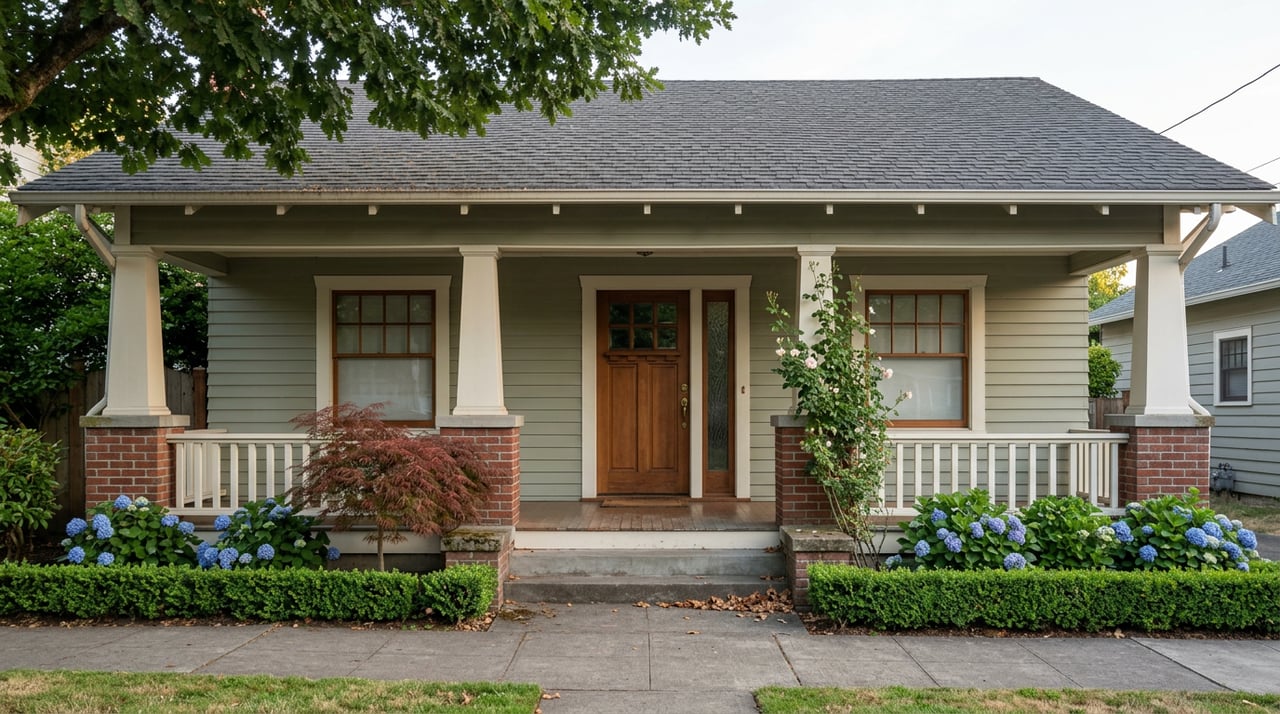
That's a five-fold spread inside the same city limits, recorded during the same thirty-day window. The number isn't a fluke of timing. It reflects housing stock that was built in entirely different decades for entirely different buyers. Terra Linda and Lucas Valley hold Marin's largest concentration of Eichler homes, built for a specific mid-century vision of indoor-outdoor living on flat, walkable streets. Dominican and Black Canyon carry an older layer of Victorian and Arts and Crafts homes on larger lots near Dominican University, where scarcity of that architecture keeps prices high even as days on market stretch past four months. Marinwood's own number in that snapshot is harder to explain by architecture alone. At 98 days on market, more than triple Terra Linda's pace, it looks less like a defined luxury pocket and more like a handful of large, slow-moving estate listings pulling a thin sample upward, the same effect that shows up again below in Gerstle Park.
Prices in every one of these pockets have shifted in the months since March. What hasn't shifted is the structural gap between them. Terra Linda and Marinwood were never pricing the same kind of home, and that relative distance is the more durable story than any single month's figures.
If you've only looked at the citywide figure, you've seen something like Redfin's three-month median sale price of $1.4 million through June 2026, or Zillow's average home value of roughly $1.28 million as of the same month. Those numbers aren't wrong. They're just doing what any blended average does: taking the Canal's $487,500 listings and Marinwood's $2.67 million listings and reporting the midpoint as if it represented a coherent market.
It doesn't. A buyer with an $800,000 budget and a buyer with a $2.5 million budget are not competing for the same inventory, the same days on market, or the same negotiating leverage. They're shopping in different cities that happen to share a mailing address. The citywide median tells you where San Rafael sits relative to the rest of Marin. It tells you almost nothing about what your specific budget will buy inside it.
Gerstle Park is the neighborhood that best demonstrates why even a single submarket's median needs a second look before you trust it.
Over the three months ending July 2026, Gerstle Park's median sale price ran to $1.2 million, up 9.6 percent from the same period the year before, with homes selling in an average of 23 days, down from 28 days the prior year. On its face, that reads as a neighborhood heating up fast.
But Zillow's Gerstle Park page, updated through the end of July 2026, showed the average home value actually down 1.6 percent over the same twelve months. Two data sources, two different directions, same neighborhood, same month.
The reconciliation isn't a data error. It's volume. Gerstle Park sold 13 homes in July 2026, up from 8 the year before. That's a healthy increase in activity for a neighborhood this size, but it's still a small enough sample that one or two larger, better-updated homes closing in a given month can pull the median sharply upward without the broader stock of homes actually appreciating. A citywide market with hundreds of monthly sales absorbs an outlier easily. A neighborhood moving low double-digit sales a month does not. The median swings with whichever specific houses happened to close, not with a broad shift in what Gerstle Park homes are worth.
This matters directly if you're pricing a sale or sizing an offer in a neighborhood this size. The headline median is a real number, but in a thin market it's closer to a snapshot of last month's sellers than a forecast of next month's buyers.
Once you accept that San Rafael's median is really eight stories stitched together, the useful question changes. It's no longer "what does San Rafael cost." It's "which San Rafael am I actually shopping in, and what does that submarket's price reflect."
A few things worth matching to your own priorities before you set a budget:
None of these submarkets is objectively the better buy. They're solving for different things, and the price difference is the market correctly pricing that difference in.
Before you anchor a budget to a number you saw on a portal, ask which neighborhood that number was actually built from. A citywide median blends housing stock that has nothing in common. A single neighborhood's median, especially in a lower-volume pocket like Gerstle Park, can move on a handful of closings rather than a real shift in value. The number that matters is the one built from recent, comparable sales in the specific streets you're actually considering, read alongside how many homes have actually traded there in recent months.
That's the kind of read that comes from watching these submarkets close by close, not from a single portal snapshot. If you're comparing San Rafael neighborhoods and want a clearer picture of what a given budget actually buys block by block, Nicole Burton can walk through the current inventory and comparable sales with you directly.
Stay up to date on the latest real estate trends.
Driven by a commitment to her clients, Nicole serves them with the utmost honesty, integrity, and professionalism. Work with her today!